COST Action BetterCare · CA22152
A European call to make care at home safer
The Helsinki Declaration on Patient Safety at Home places informal caregiving and care at home firmly within the patient safety agenda.
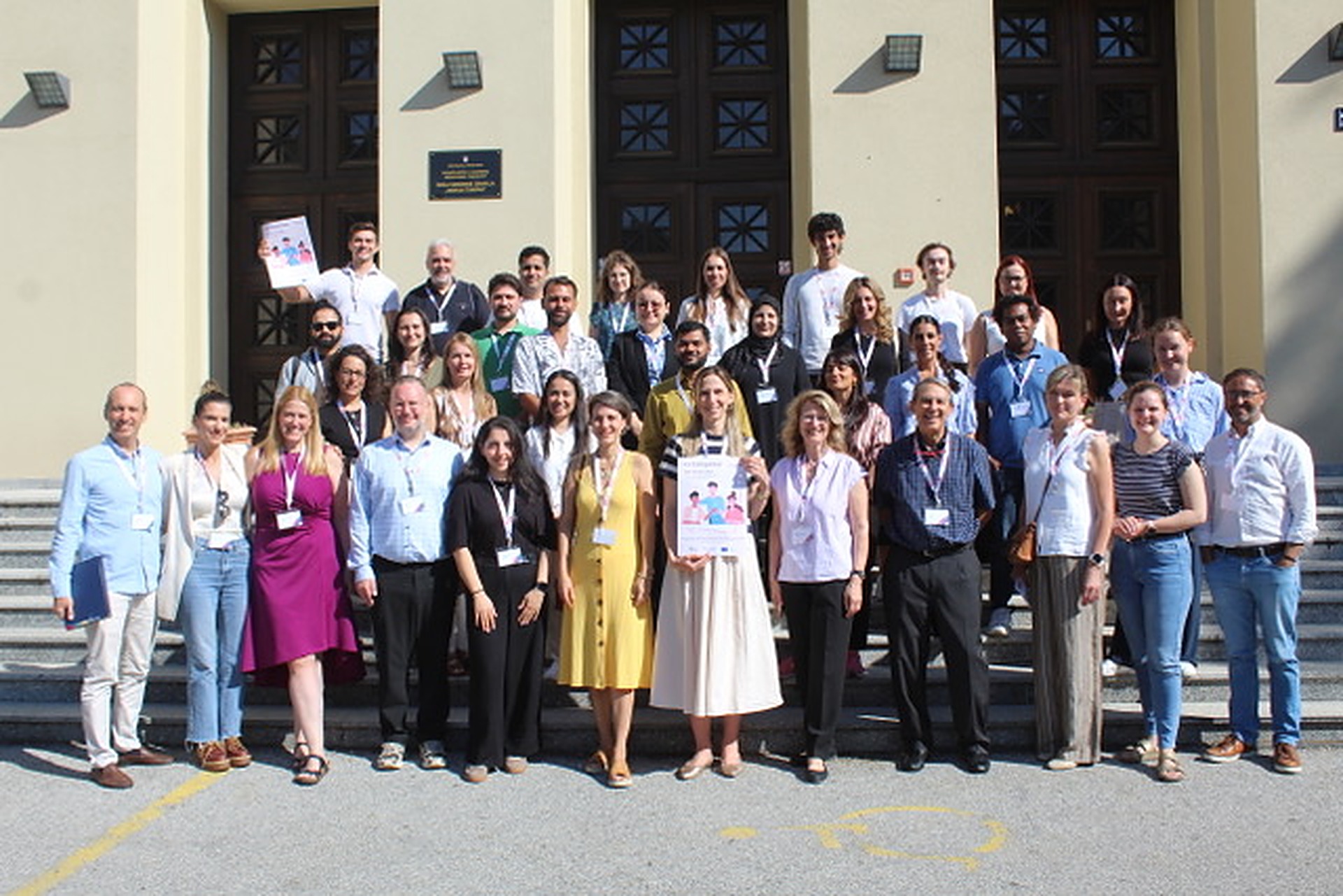
Following the Helsinki meeting of 14–15 April 2026, the BetterCare network (COST Action CA22152) developed the Helsinki Declaration on Patient Safety at Home. It recognises that the home is no longer simply a place where care happens after discharge, but an increasingly important setting of care in its own right.
As health systems move towards continuous, distributed and technology-enabled models of care, patients and informal caregivers become active participants in care processes. Patient safety must therefore extend beyond institutional settings and cover the entire continuum of care, including the home.
The Declaration represents an important outcome of our collective work and reflects a broad, multi-stakeholder consensus. Its development involved associations representing informal caregivers, health and social care professionals, academic and research institutions, public authorities, ministries, national agencies, international organisations, and other key stakeholders with expertise in patient safety, home care, long-term care and integrated care. This diversity of perspectives strengthens the relevance and legitimacy of the Declaration and reinforces its potential to inform policy, organisational practice and future initiatives across Europe.
Care at home is no longer the edge of the health system. It is part of it.
Why it matters
Millions of informal caregivers deliver complex care every day without formal recognition, training or system support.
people in Europe provide informal long-term care.
people will need long-term care in the EU by 2050, up from 30.8 million today.
of EU households needing care receive professional home-care services.
of informal long-term care in the EU is provided by women.
The safety of the person receiving care and the wellbeing of the caregiver are intrinsically connected.
What the Declaration calls for
The Declaration identifies ten interconnected areas for action.
- Recognition of informal caregivers within patient-safety systems
- Recognition of the home as a priority safety setting
- Integration of health and social care
- Institutional accountability
- Case management and navigation
- Caregiver training and health literacy
- Prevention of caregiver burnout
- Support following safety incidents
- Protection of paid home-care workers
- Development of appropriate measurement and indicators
Read the Declaration
Read and download the official Helsinki Declaration on Patient Safety at Home.
Helsinki Declaration on Patient Safety at Home
The BetterCare declaration calling for patient safety to extend beyond institutional settings and into the home.
Key messages for each audience
The same Declaration, framed for the people you need to reach.
Policymakers and public authorities
Future-proofing European welfare. Informal carers are the structural backbone of our healthcare architectures; ignoring home-care safety is no longer a viable policy option.
- Formal recognition Explicitly codify informal caregivers as active partners in healthcare legislation.
- System accountability Prevent the silent transfer of clinical risks to families without structured funding, preparation or follow-up.
- Comparable metrics Standardise European indicators to measure home-care errors, caregiver burden and unmet needs.
NGOs, patient and carer organisations
Protecting those who care. When health systems fail to support caregivers, they face severe exhaustion, burnout and double victimisation — intense guilt and distress after preventable home incidents.
- Minimum safety conditions Guarantee access to practical training, medication reconciliation and respite care.
- Non-blaming systems Establish supportive reporting frameworks for home-care incidents rather than blaming families when systems fail.
- Formalising paid care Improve working conditions and pension rights for paid home carers.
Healthcare and social care organisations
The hospital without walls. The home is an active, technologically complex site of 24/7 care delivery, and fragmented clinical designs leave vulnerable families navigating disconnected medical and social services on their own.
- Case management Treat coordination not as admin, but as a practical clinical tool to guide families and manage digital health data.
- Safety as a basic intervention Treat caregiver training — medical devices, digital tools, health literacy — as a fundamental prescription for safe discharge.
- Protecting caregivers to protect patients Monitor caregiver burnout as a primary clinical risk factor for readmission.
Communication toolkit
These materials are freely available to support the dissemination of the Declaration. Please use and adapt them within your institutional, professional and national networks.
Editable infographic
An editable PowerPoint version of the Helsinki Declaration infographic.
Download the PowerPointElevator pitch — general audiences
A short spoken introduction for conversations with any audience.
Download the pitchElevator pitch — policymakers, NGOs and healthcare organisations
The same introduction, tailored to decision-makers and organisations.
Download the pitchLetter to Management Committee members and COST networks
A ready-to-send letter to circulate the Declaration within your network.
Download the letterAwareness and dissemination example
An example from the University of Malta for raising awareness and disseminating the Helsinki Declaration on Patient Safety at Home.
View the examplePromotional activities tracking sheet
An Excel sheet for recording and coordinating promotional and dissemination activities related to the Helsinki Declaration.
Download the Excel sheetFrom awareness to action
We particularly welcome members using the Declaration as a basis for dialogue and action, rather than simply circulating the document. You can:
- Initiate discussions with policymakers and decision-makers.
- Raise the issue at national conferences, meetings and workshops.
- Engage patient, carer and NGO networks.
- Discuss its recommendations with healthcare and social-care organisations.
- Identify opportunities for national or regional implementation.
- Promote research and data collection on patient safety at home.
- Identify gaps in existing patient-safety and care strategies.
- Explore opportunities for collaboration between formal and informal caregivers.
Get in touch
To request the communication materials, to tell us about a dissemination activity in your country, or to propose a collaboration, write to us through the Contacts page.